
Is Mexico City Worth Visiting in 2026? An Honest Yes, With Caveats
Is Mexico City worth visiting? Yes, and I will give you the honest version rather than the brochure one.
This post will cover everything you need to know about traveling to one of the biggest cities in the world so you can make the decision for yourself!
I was born and bred in Mexico City, and to be quite honest, I never really thought of the city as much growing up.
It wasn’t until I decided to travel the world and live in different cities across continents that I realized CDMX, as it’s locally called now, is one of the most thrilling capitals in the world.
After almost ten years of traveling and finding home bases in places like New York City, Miami, Bangkok, London, and Düsseldorf, I decided to move back to Mexico City because this city is pretty unique.
You can’t ever really get bored here because there is something going on every second of every day!
Of course, like any big city in the world, Mexico City has a lot of pros and cons.
For that reason, I put together a comprehensive guide with everything you need to know about this humongous metropolis so you can decide if Mexico City is worth seeing on your own.

This post may contain affiliate links. If you purchase through them, I may earn a small commission at no extra cost to you. Thanks for supporting my small business.
Is Mexico City Worth Visiting? The short answer
Yes, with three caveats that most articles will not tell you.
Mexico City is the best value big city in North America; it has the best food of any capital I have been to, and the US State Department rates it Level 2, exercise increased caution, the same tier it applies to France, Italy and Spain and the lowest tier applied to any populous Mexican state. If your worry is cartels, that worry is misplaced here.
The three caveats:
It sits at 2,240 meters, about 7,350 feet. Higher than Bogotá. Most people feel it for the first day or two.
There is a live argument going on about tourists. Since July 2025, anti-gentrification protests have been happening in Roma and Condesa, and some of them have turned ugly. You are very unlikely to be caught up in one, but you should understand what people are angry about before you arrive.
The air is bad in the dry months. In the first four months of 2026, the Valle de México ran six environmental contingencies. If you have asthma, come in the second half of the year.
Come anyway. Just come informed, stay somewhere that is not an unregistered Airbnb, and learn twenty words of Spanish.
| Pros | Cons |
| Cheapest big capital in North America | Sits at 2,240 m, altitude is real |
| Food, from street stalls to the world’s best restaurants | Air pollution in the dry months |
| Level 2 advisory, the lowest applied to any large Mexican state | Traffic, and a metro that is packed |
| More museums than almost any city on earth | Crowds, all year |
| Teotihuacán, Xochimilco and the volcanoes are all day trips | Earthquake zone |
| Chapultepec, four times the size of Central Park | Tap water is not drinkable |
| Excellent for solo travelers | A live local backlash against tourists and rising rents |
Why should you visit Mexico City?
👉🏼 Is Mexico City safe?
Like any big city, Mexico City has safe and unsafe areas. Generally, Mexico City is a very safe destination to visit.
Safe areas to stay for tourists include Roma Norte, Roma Sur, Condesa, Polanco, Lomas de Chapultepec, Cuauhtémoc, and Santa Fe. When staying in any of these areas, you will rarely encounter problems.
That said, I still recommend practicing the same safety precautions you would in any big city.
Mexico City is high, and you will feel it
Mexico City sits at 2,240 meters, about 7,350 feet. That is higher than Bogotá and higher than Denver. When the World Cup came here in June 2026, the altitude of this stadium was the single most discussed thing about the venue.
Most people are fine. But on your first day or two, expect to be out of breath walking up the steps at Bellas Artes, to get a headache in the afternoon, and to find that two mezcales hit like four.
What to do about it. Drink far more water than you think you need. Go easy on alcohol the first night, which is exactly the night you will not want to. Do not plan Teotihuacán or a volcano on day one. If you know you are sensitive, take it slowly for 48 hours, and you will be fine after that.
It also means the sun is stronger than it feels. It is 20 degrees and pleasant, and you will still burn.
What the travel advisories say about Mexico City
Most people who worry about this are picturing the Mexico they have seen in the news, which is a handful of states with cartel violence in them. Mexico City is not one of those places, and the official ratings say so.
The US State Department rates Mexico City as Level 2: Exercise Increased Caution. That is tier two of four, the same tier applied to France, Italy, Spain and Germany, and the lowest tier applied to any populous Mexican state. The advisory says: “Both violent and non-violent crimes occur throughout Mexico City. Exercise extra caution, especially at night, outside of popular tourist areas. Petty crime occurs frequently.” And critically: “There are no specific restrictions on travel for U.S. government employees in Mexico City.” In the states where cartel violence is the problem, there are.
One change worth knowing about. Since 2025 the advisory language for Mexico City includes terrorism as a listed risk factor. That wording appeared after the United States designated Mexican cartels as foreign terrorist organizations. It is a legal reclassification, not a change in what is happening on the streets of the Condesa.
The UK FCDO advises against all but essential travel to parts of Mexico. Mexico City is not one of them. Its Mexico City guidance is practical rather than restrictive, and the one thing it flags specifically is that “political demonstrations are common in Mexico City”.
Canada publishes a separate advisory stream for Mexico that it built out around the 2026 World Cup.
Read all of that as: the risk here is having your phone taken on the metro, not anything else. You can read more about safety in Mexico City in my dedicated post.
👉🏼 Is Mexico City tourist friendly?
Mexico City doesn’t have the tourism infrastructure other cities in Mexico like Cancun or Los Cabos have, but it is generally very tourist-friendly as long as you don’t expect locals to cater to you.
While this is rapidly changing due to a high influx of digital nomads, most people working at shops, restaurants, and cafés don’t speak English.
Neighborhoods like Condesa and Roma are changing this, but you should still expect to have to translate often.
Also, one thing to note about traveling to Mexico City is that, since 2020, many digital nomads and remote workers have been living here for extended periods, and locals are beginning to resent gentrification.
While you shouldn’t encounter problems, there is definitely a rise in xenophobia among Mexico City locals as many have been displaced from their homes.
The issue is mostly targeted toward long-term residents rather than visitors, but it is still something you should keep in mind when visiting.

Reasons why you should visit Mexico City: Pros
1. Rich history & attractions: Historic Center
✨ Zócalo
Also known as the Plaza de la Constitución, the Zócalo is the main square and the historical heart of Mexico City.
This place is a must-visit on anyone’s Mexico City itinerary as it holds immense cultural and historical significance.
For centuries now, the Zocalo has been the main gathering place for political, cultural, and social events in the city.
These days, the Zócalo is a magnificent space to look at, but it also acts as a cultural center of sorts where food, crafts, and souvenirs are sold.
Occasionally, events and concerts are held here as well.
As a tip, the Zócal still continues to be an important gathering spot in the city.
Protests happen here often, as do plenty of political events. My advice is to check what’s going on during your visit, as it can get incredibly crowded.
✨ Templo Mayor
You wouldn’t expect to find Mesoamerican ruins in the middle of a huge metropolis, but in Mexico City, everything is possible!
Templo Mayor was once the center of Tenochtitlan (the former Aztec capital). The Spanish largely destroyed it during the conquest and replaced it with a cathedral.
Some ruins remain to explore, and you can still imagine the splendor this once-great capital held, even though few temples survived.

✨ Palacio Nacional
Located in the city’s historic center, Palacio Nacional serves as the official seat of the executive branch of the Mexican government.
While some parts are off-limits to visitors for that very reason, you can still enter and check out the interior.
The building itself is a magnificent work of art and a testament to colonial architecture in Mexico.
A favorite feature is Diego Rivera’s mural series, “The History of Mexico.”
His works cover the walls of the main staircase and tell the story of Mexico as a country, from pre-Columbian times to the Mexican Revolution.
2. Amazing Architecture
One of my favorite things about Mexico City is its blend of amazing architecture.
One second, you can be looking at humongous skyscrapers, and the next, you can be admiring ancient Aztec ruins or colonial buildings.
The city has plenty of well-preserved ruins and buildings from prehispanic and Colonial times.
As the city grew and modernized, new buildings showcasing beautiful Art Nouveau and Neoclassical styles also popped up.
Seriously, walking around the city feels like you’re strolling through an architecture museum that reflects Mexico’s Citys ever-evolving identity.

3. Ancient Mesoamerican civilizations
Mexico City has been inhabited by several ancient civilizations, each of which has left a significant mark on the city’s culture and history.
The most famous of these civilizations were the Aztecs, who founded their capital city of Tenochtitlan (modern-day Mexico City).
Before the Aztecs, though, the area in and around Mexico City was home to several other civilizations.
These include the Toltecs in the 10th century and the Teotihuacanos between the 1st and 8th centuries
4. Pyramids of Teotihuacan
Teotihuacan is one of the most significant archeological complexes in the world, about an hour’s drive from the center of Mexico City.
Teotihuacan was once the biggest city in North America, and the Aztecs later used it as a pilgrimage site.
Today, tourists can explore a sizable portion of the ruins and take in Teotihuacan’s two impressive pyramids, the Pyramid of the Sun and the Pyramid of the Moon, which are connected by a broad avenue with many still-standing structures and murals.
In addition, hot-air balloon rides are available here! If you have the time and resources, I really recommend taking one because it will help you understand the true grandeur of the site.

5. Authentic Mexican culture
Mexico City has its own unique identity, history, and culture, making it very different from the rest of Mexico.
Even if you’ve visited other destinations in Mexico, you’ll feel as though you’re getting to know an entirely different side of the country.
6. Awesome Foods & Restaurants
Mexico City has one of the most interesting food scenes in the entire world.
Not only will you find incredible street food on every single corner of the city, but you will also find tons of cozy hole-in-the-wall restaurants as well as plenty of high-end dining establishments.
As if that weren’t enough, Mexico City is also home to some of the best restaurants in the world, including Pujol, Sud 777, and Quintonil, to name just a few.
7. Buzzing Bars and Nightlife
If you’re into glitzy outings, you’ll fall head over heels in love with Mexico City’s nightlife.
The city is home to some of the best bars in the world as well as some of the coolest clubs you’ll ever visit (think Salon Solin, Looloo, Republika, and Montana to name just a few!).

8. Xochimilco Floating Gardens
Located in the south of Mexico City, Xochimilco Floating Gardens are a set of canals and artificial islands that were created by the Aztecs for agricultural purposes.
These days, the canals are a popular tourist attraction, with plenty of tours available on colorful boats called “trajineras” that can take you to several of the islands (if you’re into creepy stuff, make sure to book a tour that includes a visit to the Island of the Dolls – you can thank me later!)
Xochimilco is also a popular drinking spot in Mexico City. You can head over there with your friends, rent a trajinera, and party the day away as you ride the canals!
There are several tours available as well where you can join a shared trajinera and meet people (great if you’re traveling solo and want to make friends).
9. Fantastic Art Scenes & Museums
🎨 National Anthropology Museum
The National Anthropology Museum is one of the most wonderful museums I’ve ever visited. This place alone makes Mexico City worth visiting.
This enormous museum is dedicated to preserving and exhibiting the cultural heritage of Mexico’s indigenous peoples.
Here, you’ll find a vast collection of artifacts, including the Aztec Calendar Stone and a replica of the tomb of Mayan ruler Pakal the Great, as well as exhibits spanning thousands of years of history, representing various indigenous communities from different regions of the country.

🎨 Frida Kahlo Museum
The Frida Kahlo Museum, also known as the Casa Azul (Blue House), is a must-visit attraction in Mexico City.
This museum is located in the actual house where Mexican artist Frida Kahlo was born, lived, and created much of her artwork.
During your visit, you can explore the rooms that have been preserved to reflect Kahlo’s life as well as a collection of her paintings, personal belongings, and tools.
You will get a pretty intimate insight into her artistic vision, struggles, and legacy (I highly recommend watching the 2002 Frida movie before visiting!).
🎨 Palacio de Bellas Artes
The Palacio de Bellas Artes (Palace of Fine Arts) is an iconic cultural landmark in Mexico City and a magnificent building that combines neoclassical and Art Nouveau architectural styles.
These days, it acts as one of the most important centers for performing arts in the country, not to mention it also contains collections of Mexican art, including murals by renowned artists such as Diego Rivera and David Alfaro Siqueiros.
As if that weren’t enough, its rooftop offers panoramic views of the city, allowing visitors to appreciate the architectural splendor of Mexico City’s historic center.
Whether attending a performance or exploring art exhibitions, a visit to the Palacio de Bellas Artes is a must on your itinerary.

10. Beautiful Churches and Cathedral
⛪ Metropolitan Cathedral
Located in the heart of Mexico City, the Metropolitan Cathedral is a magnificent religious and architectural masterpiece, not to mention it is also the largest cathedral on the American continent!
Even though religion isn’t as important for a large percentage of locals in Mexico City anymore, the cathedral is still a symbol of the city’s cultural heritage and history.
Its construction began during the 16th century and took over 250 years to complete.
Its elaborate details and gorgeous architecture are reason enough to visit this Mexico City attraction, but also the fact that stepping inside will take you back centuries of Mexican history.
⛪ Basilica of Santa Maria Guadalupe
Another important religious site in Mexico City is the Basilica of Santa Maria Guadalupe, which is one of the most important Catholic pilgrimage sites in the entire world.
It was built in order to honor Virgin Mary under the title of Our Lady of Guadalupe. The complex is made up of several buildings, with the main basilica dating all the way back to the 16th century (it wasn’t completed until 1976), so it actually looks quite modern!).

11. Amazing green space and parks
🌳 Parque Mexico
Located in the Condesa Neighborhood, Parque Mexico is one of the city’s lungs and one of the most iconic parks in Mexico City.
The park features plenty of natural beauty, a wide array of trees, and lanes that will make you feel like you’re in a mini jungle.
In addition to that, this park has become a favorite for ex-pats and visitors because of the beautiful Art Deco buildings surrounding it, many of which harbor cafés, boutique shops, and trendy restaurants.
Something else you’ll love about Parque Mexico is the fact that it is a sort of artistic hub in Condesa.
Dance classes, exhibitions, outdoor concerts, and live performances are all held here any day of the week, especially during the afternoons and early evenings.
During the weekends, Parque Mexico gets pretty crowded, so I would recommend visiting on a weekday if possible.
🌳 Bosque de Chapultepec
Bosque de Chapultepec is four times the size of Central Park and almost the size of Singapore, making it one of the largest urban parks in the world.
Being here always makes me feel as though I’ve left the city entirely. Because the park is absolutely humongous, it is divided into different sections.
The first one is the most popular one and one where you’ll find some of the biggest attractions in Mexico City such as the Chapultepec Castle, the zoo, and the Museum of Anthropology.
This part can get pretty crowded and feel a bit more commercialized for that reason, but you will still be able to find a quiet spot either way.
The second section also has lots of attractions as well as plenty of hidden gems.
This part of the park is pretty developed but has a much more local feel to it.
You’ll find restaurants, locals hosting picnics, joggers, and dogs running around.
The third section feels more like an actual forest you can get lost in for hours!
Most people never really visit this area of the park, so you will feel like you have it all to yourself.

🌳 Parque Alameda Central
Ever since it opened during the 16th century, Parque Alameda Central has been a popular hangout spot for Mexico City locals.
This historical park is known for its beautiful monuments, fountains, and landscaping as well as for being home to several important buildings in the city like the Palacio de Bellas Artes.
🌳 Jardin Allende
Jardin Allende is a small yet incredibly charming park located in the Centro Histórico.
The park boasts a fountain, benches, and a pretty tranquil ambiance where you can observe the local life in Centro.
After the World Cup
Mexico City hosted five matches of the 2026 World Cup at the Estadio Azteca, including the opening game of the entire tournament on June 11, 2026. It was the highest-altitude venue in the competition, which is the fact everyone ended up talking about.
What that means for you now is mostly good. The tournament pulled forward a lot of infrastructure work and hotel supply, and the peak pricing window has passed. If you were put off visiting during June and early July, that reason has gone.
It also poured fuel on the property argument. One of the July 2025 anti-gentrification marches was explicitly aimed at speculation ahead of the tournament and routed past the stadium. That has not gone away.
12. Cheapest capital city in North America
While Mexico City isn’t the cheapest place to visit in the country, it is still the most inexpensive city on the North American continent.

13. Perfect for solo travelers
Mexico City has a pretty young and open-minded atmosphere, which makes it perfect for solo travelers.
With so many museums, attractions, parks, and events you can attend on your own, the city is perfect if you’re traveling alone.
Making friends is also very easy, as the city has become a popular place for solo travelers, remote workers, and digital nomads.
14. Enormous marketplaces
One of the best things to do in Mexico City if you want to get to know a more local side of it is to check out a few of its markets.
Markets in Mexico City sell everything you can think of, ranging from fresh fruits and produce to prepared food, groceries, clothes, home supplies, and just about everything in between.
Some of the top markets to visit include the Central de Abastos (this is where most restaurants in Mexico City get their supplies and ingredients!), Mercado Medellin, Mercado San Juan, and Mercado Sonora.

15. Live music, every night of the week
Mexico City is a hub for music, with plenty of concerts and festivals being held here for those who enjoy modern music.
Mariachi and jazz are also a big part of Mexico City’s culture.
One of the best places to listen to live mariachi music is at Plaza Garibaldi, a lively square lined with bars and restaurants where you can enjoy traditional Mexican food and drinks while listening to live mariachi music.
As a local tip, I recommend visiting Garibaldi on a tour. While the area is pretty guarded because of tourism, it’s not exactly the safest place in Mexico City.
Jazz is also popular here, with plenty of bars offering live jazz every evening.
Musak, Jules Basement, Tokyo Music Bar, Jazzatlán Capital, Parker & Lenox, and Zinco Jazz Club are all popular spots for jazz lovers.
16. Largest Butterfly Migration (Monarch Butterfly Reserve)
Mexico City is located close to the Monarch Butterfly Reserve, where you can witness one of the most spectacular natural phenomena in the world.
Every year, millions of Monarch butterflies travel to Mexico to escape the cold climate of Canada and the United States.
The butterflies arrive in Mexico in November and spend the winter in the reserve’s forests before heading back north in March.
If you’re visiting Mexico City during this time of the year, I highly recommend visiting the reserve to experience one of the coolest natural sights the country has to offer!

17. Excellent location for day-trips
Thanks to Mexico City’s centric location amid many states, the city is a wonderful hub for day trips.
It would be impossible for me to list them all in one post, but some of my favorite day trips to take from Mexico City include Malinalco, Valle de Bravo, Taxco, Queretaro, Puebla, Cholula, and Tepoztlan, to name just a few.
18. Nearby Volcanoes to hike
Mexico City is surrounded by impressive volcanoes you can hike!
Nevado de Toluca and La Malinche are two of the “easiest” hikes around Mexico City and perfect to get acclimatized (although I still found these hikes pretty tough!).
If you’re looking for a challenge, you can also choose to hike the Popocatepelt, Iztaccihuatl, and Pico the Orizaba, all of which are some of the highest peaks in North America.
19. Day of the Dead Festival
Day of the Dead is huge all over Mexico and in Mexico City, it is mainly celebrated with a vibrant parade featuring elaborate puppets, costumed performers, and lots of other things that depict the story behind the date.
The parade usually begins at the Zocalo and travels all the way through Paseo de la Reforma (the city’s most important avenue).
Aside from the parade, there are plenty of other festivals and events that take place in the city between October and November.

Visiting Mexico City: Cons
20. Unsafe Neighborhoods
Mexico City has plenty of safe neighborhoods, but like any large city, it also has some unsafe ones.
As long as you keep your wits about you and know which areas to avoid, this should not be a huge con when deciding to visit Mexico City.
Areas to be careful in: Tepito, Doctores, and the northern edge of the Centro Histórico past Lagunilla, especially after dark. Iztapalapa and Neza are enormous working-class boroughs where nothing takes you as a visitor anyway. Note that the tourist Centro, meaning the Zócalo, Madero, Bellas Artes and the streets around them, is not on this list. It is heavily policed, it is full of people until late, and it is one of the best parts of the city. The line is roughly Eje Central: west of it and south of it, you are fine.
Both CDMX and the State of Mexico are rated Level 2 by the US State Department, exercise increased caution, which is the same rating given to much of Western Europe and the lowest applied to any large Mexican state. The tourist-relevant risk here is pickpocketing and phone snatching, not violent crime.
21. Air Pollution
Mexico City faces significant air pollution challenges.
Its large population, car emissions, industrial activities, and humongous urbanization rates, coupled with the city’s geography and location in a high-altitude valley, all contribute to the problem.
Prolonged exposure to air pollution can lead to respiratory problems, cardiovascular issues, and plenty of health complications.
For a short trip this will not affect most people. But it is worse than it used to be and the bad window is not where people expect. In the first four months of 2026, the Valle de México ran six environmental contingencies: one for particulates on New Year’s Day, set off by fireworks and a thermal inversion and five for ozone in January, February, March and April. Each one triggers double Hoy No Circula, which matters if you have rented a car. If you have asthma or you are traveling with someone who does, the second half of the year is easier than the first.
22. Poor Water Quality
Water quality in Mexico City isn’t great in some areas because of population growth, pollution, and industrial activity.
This, however, does not really affect tourists staying in nicer neighborhoods like Roma Norte, Condesa, Polanco, Lomas de Chapultepec, and others.
As long as you don’t drink tap water, you will be fine!
Every hotel and restaurant in the city works on that basis. Worth knowing separately: the supply problem that made headlines in 2024, when the Cutzamala reservoir system dropped under 35 percent and people started using the phrase Day Zero, has eased.
The system has recovered to somewhere around 56 percent; no borough is currently under drought restrictions, and Day Zero is not a live scenario for your trip. It hasn’t gone away as a structural problem, since the distribution network still loses over 40 percent of its water to leaks, but you won’t notice it as a visitor.
23. It’s Crowded
With 9.2 million inhabitants, Mexico City can get pretty crowded. Add to that the fact that around 21 million live in the metropolitan area, making it the largest city in North America.
24. Traffic can be a challenge
Traffic can be an issue in Mexico City, especially during the weekdays. This can make moving around pretty time-consuming, especially if you don’t want to walk or take public transportation. Uber can help, but you still risk getting stuck in traffic.

25. Earthquake hotspot
Earthquakes are a big issue in Mexico City. felt one with an epicenter inside the city while I was writing the first version of this post, and that is the kind you get no warning for.
Mexico City is located in a seismically active region, making it prone to earthquakes.
The city has experienced devastating earthquakes throughout its history, including the 1985 and 2017 earthquakes.
These earthquakes caused widespread destruction, loss of life, and major infrastructure damage.
I have felt more earthquakes here in the last five years than in the twenty before them.
There has been no fatal earthquake in the city since 2017 one, they can be a pretty terrifying experience no matter how used to them I get.
This is definitely a huge con of visiting Mexico City.
The alarm gives you seconds, not minutes. For a big quake on the Guerrero or Oaxaca coast, you might get 60 to 90 seconds, which is enough to get out of a building or into a doorway. For a quake with a local epicenter, which is what I felt while writing this, you get almost nothing. The alarm and the shaking arrive at the same time. Know where the safe spot in your room is on the first night rather than working it out during one.
Read about earthquake safety before visiting the city so you know what to expect, how to react, and how to stay safe during one.
26. Red light district & prostitution
Even though prostitution is illegal in Mexico, Mexico City still has several red-light districts. This, however, does not affect tourists at all.

Gentrification and the backlash: what it means for you as a visitor
If you have seen a headline about Mexico City in the last year, it was probably this one.
What actually happened. On 4 July 2025, a march against gentrification through Roma and Condesa turned violent. At least fifteen businesses were vandalized, windows were smashed, storefronts were sprayed with “Get out of Mexico” and, in one case, “Kill the Gringos”. Rocks were thrown at people who looked foreign. The US Embassy put out a security alert. Two more marches followed that month: one routed past the US Embassy on Reforma, and another explicitly aimed at property speculation ahead of the World Cup. In August, a protest damaged the MUAC museum at UNAM, and books were burned in a campus library.
What the government did. Mayor Clara Brugada announced a fourteen-point plan within weeks and said the campaign “should not become an excuse for discrimination or xenophobic expression”. President Sheinbaum was blunter: “The only people who have ever burned books are fascists.” In January 2026, the city passed Bando 1, which caps rent increases at the previous year’s inflation rate, creates a reference index for reasonable rents, regulates short-term rentals and sets up a tenants’ rights ombudsman. It targets nine neighborhoods in Cuauhtémoc and Miguel Hidalgo, which is to say Roma, Condesa, Juárez and the areas around them.
Why people are angry, and they are not wrong. Rents in this city rose 9.6 per cent in a year. Brugada said publicly that in some areas rents have doubled in twelve months. Whole streets in Roma and Condesa are now priced for people earning in dollars, and the people who lived there before are gone. In November 2025, Fodor’s put Mexico City on its No List for 2026 over exactly this, citing rising rents, displacement, and restaurants toning down the spice to please foreign palates. It did not cite security.
What this means for you as a visitor. In practice, very little. Nobody is going to be hostile to you for being on holiday for a week. The anger is at people who move here on a foreign salary, rent an apartment a local family used to live in, and never learn the language. But it costs you nothing to be on the right side of it:
Stay in a hotel or a registered rental rather than an unregistered Airbnb. Every legal short-term rental in this city must display a registration number from the city’s host registry.
Spend outside Roma and Condesa. Coyoacán, San Rafael, Juárez, Santa María la Ribera, and the Centro all have better food and cost half as much.
Learn some Spanish. It is the single thing that changes how you are treated.
And if you see a march, walk the other way. Political demonstrations are common here and the FCDO says so explicitly in its Mexico City guidance.
Getting around Mexico City
✔ Walking around Mexico City
Mexico City is humongous, so walking all over the city isn’t possible, but plenty of neighborhoods such as Condesa, Roma, Cuauhtémoc, Polanco, and others are very walker-friendly, so you can easily explore these areas on foot if you wish to.
✔ Renting a car
While renting a car is pretty easy and inexpensive in Mexico City, I personally would recommend against doing so unless you plan on taking lots of day trips out from the city and want to have the ease of doing so independently.
For one, traffic in Mexico City can be a nightmare, not to mention driving can get pretty hectic.
You may just wind up spending half of your visit to Mexico City stuck in traffic and getting stressed!
You will also end up spending a lot more money and time than expected finding parking spots and figuring out the parking rules where you are.

✔ Ubers and Taxi
One of my favorite ways to get around Mexico City is by Uber.
The app works well and is usually inexpensive, although prices can vary depending on traffic, time of the day, and whether or not it’s raining.
Additionally, there are other ride-sharing apps available you may want to download to compare prices.
These include Cabify, DiDi, and InDriver (InDriver is usually much cheaper, but cars can sometimes not be of that great quality. Keep in mind this app is cash only).
Taxis are another way to get around, but they aren’t usually recommended even by locals for safety reasons.
If you must take a taxi, make sure you only take one from an official agency.
✔ Public Transportation
👉🏼 Subway: The subway has stations all over the city (with the exception of Santa Fe). Locals in CDMX call it the “metro”.
There are 12 metro lines in total, distinguished by different colors and numbers. The cost of a one-way metro ticket, including transfers, is 5 pesos.
👉🏼 Metrobus: The Metrobus is another great, affordable, and efficient way to get around Mexico City.
The Metrobus runs above ground, unlike the metro, but it still has its own lane on the road, so traffic doesn’t affect how quickly it travels.
The Metrobús costs 6 pesos.
You must get a city card to use it because cash payments aren’t accepted (you can buy one directly at the machines at any station).

✔ Bike share: Ecobici
I love using bike sharing (EcoBici) to move around the neighborhood, like Condesa, Polanco, and Roma Norte, which have great infrastructure for cycling.
Using eco bicis is very easy. It usually takes less than 45 minutes to get from point A to point B, and the first 45 minutes are free.
After 45 minutes, you must pay $50 MXN per hour to continue riding (or drop your bike off at a station, wait five minutes, and then pick up another one).
Is Mexico City expensive?
Mexico City is not the most affordable place in Mexico, but you can easily visit the city on a budget if you stick to street food and smaller restaurants.
Accommodation prices have increased in recent years, but you can still find apartment rentals and hotel rooms for prices that won’t break the bank.
Tour prices are generally very pocket-friendly, too!
All in all, visiting Mexico City can be as cheap or as expensive as you want it to be, as there are options for every budget.
What Mexico City actually costs
Getting around is close to free. A metro ride is 5 pesos, about 28 US cents, anywhere in the system, including transfers. The Metrobús is 6 pesos. An Uber across town rarely goes over 150 pesos. This is the cheapest big city transport in North America, and it is not close.
Eating. Street tacos 15 to 25 pesos each. A comida corrida, which is soup, a main, a drink and often a dessert, 90 to 150 pesos. A good sit-down lunch in Roma or Juárez: 250 to 400 pesos a head. Dinner at one of the restaurants people fly here for: 1,500 to 3,500 pesos before wine.
Sleeping. A hostel dorm: 350 to 550 pesos. A good mid-range hotel in Juárez or Roma: 1,500 to 2,800 pesos. The Four Seasons and the St Regis are in another bracket entirely.
Museums. Most INAH and city museums are 90 to 100 pesos. Mexican nationals and foreign residents with proof of residency get free entry on Sundays. If you are a tourist, you pay on a Sunday, and Sunday is the busiest day everywhere, so go on a Tuesday instead.
Teotihuacán in 2026: 105 pesos for nationals, 210 pesos for foreign visitors, plus about 60 pesos each way on the bus from Terminal Norte.
Budget roughly 900 to 1,400 pesos a day for a comfortable trip that is not extravagant, not counting your room.

Where to stay in Mexico City
🛌🏻 Budget: Hotel PF
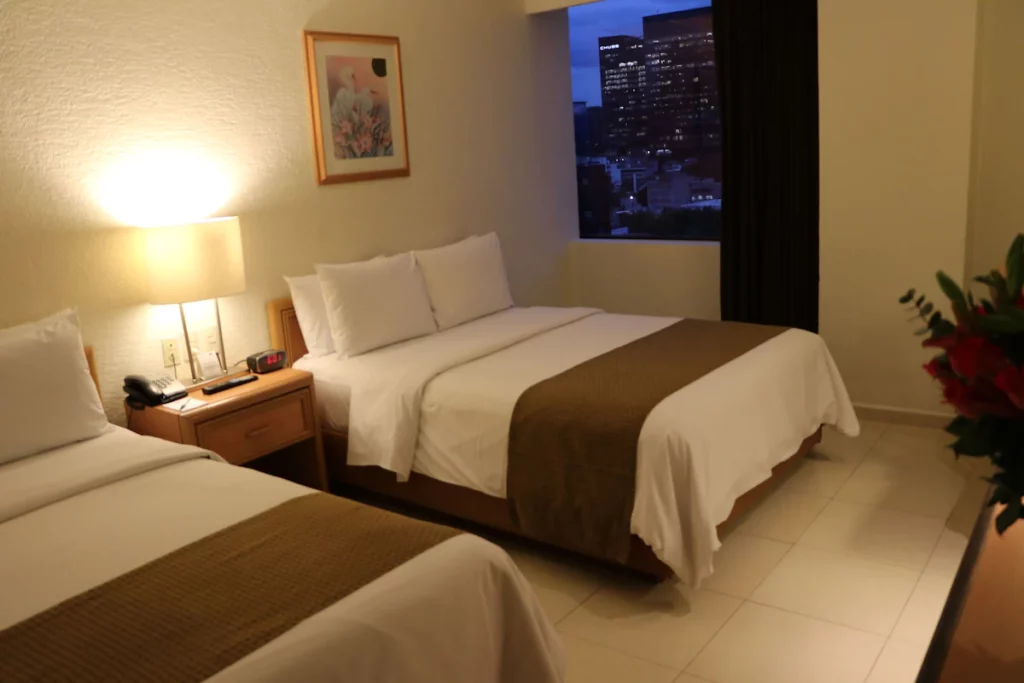
Hotel PF is conveniently located in the trendy Condesa neighborhood and offers comfortable rooms, modern amenities, and complimentary breakfast for an affordable price.
Awesome stay, I highly recommend it.
⭐⭐⭐⭐⭐ Jaime, may 2023
👉 Check rates and availability at Booking.com | Expedia | Hotels.com
🛌🏻 Mid-range: Nima Local House

Nima Local House is set in the stunning Roma neighborhood inside a stunning turn-of-the-century casona. This stunning boutique hotel features cozy rooms, intimate spaces, and incredibly stylish decor.
Immaculately clean and fantastic service. Perfect location and amenities.
⭐⭐⭐⭐⭐ Matthew, november 2021
👉 Check rates and availability at Booking.com | Expedia | Hotels.com
🛌🏻 Luxury: The Four Seasons Hotel
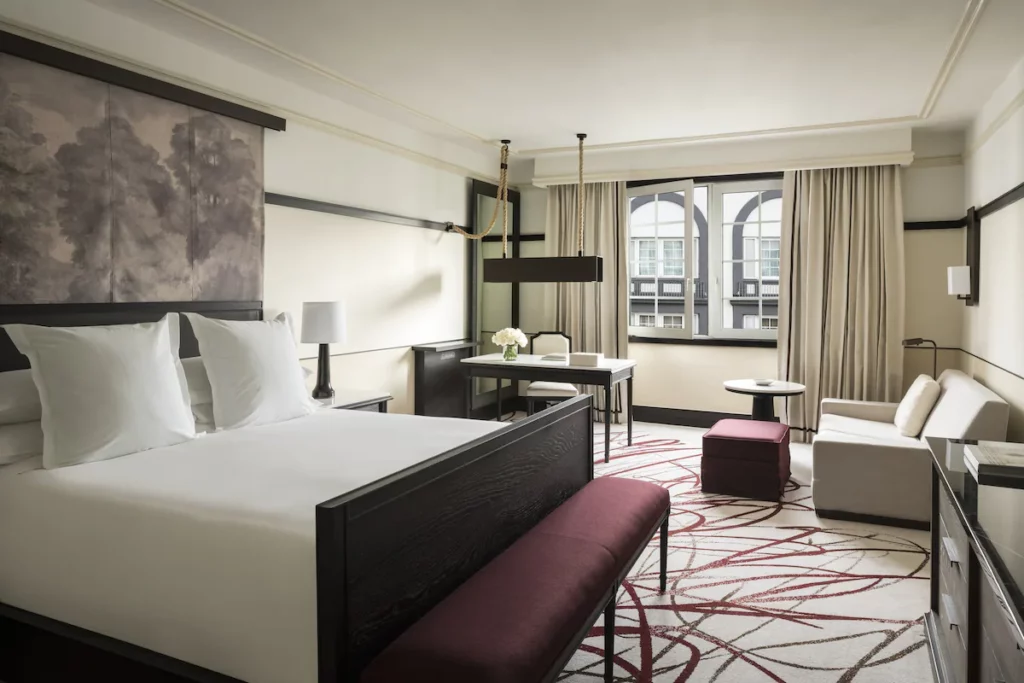
The Four Seasons Hotel is a 5-star hotel located in the lively Paseo de la Reforma, Mexico City’s main avenue.
Its beautiful and modern rooms provide plenty of comfort and the hotel features lots of amenities like a spa, upscale restaurants, and a stunning outdoor courtyard (make sure you schedule at least one Sunday brunch here during your time in Mexico City!).
The beds and linens are amazing and the staff is the best.
⭐⭐⭐⭐⭐ Alejandro, march 2022
👉 Check rates and availability at Booking.com | Expedia | Hotels.com
The best time to visit Mexico City
👍🏻 Cheapest time to visit Mexico City
Mexico City is generally a year-round destination, so prices don’t change much throughout the year.
The cheapest time to visit is between May and September, when the rainy season is going on and hotel rates and flights may drop a bit.
With that said, prices don’t really change much unless you’re visiting during a major festival or event such as Day of the Dead, Christmas, or Formula 1.

👍🏻 Best time to visit for lesser crowds
In general, Mexico City does not have a high or low travel season. There isn’t much of a difference in terms of crowdedness in a city with more than 20 million inhabitants.
Consider traveling during Mexico’s Semana Santa (Spring Break) and the Christmas Holidays if you want to visit when the city is less crowded.
During these times, many Mexico City residents leave for vacation, making the city noticeably emptier.
👎🏻 Worst time to visit Mexico City
The worst month of the rainy season in Mexico City is usually July, which typically lasts from June to October.
Even during these months, I’ve noticed rain hasn’t been as bad in recent years, but from June through September in particular, be prepared for torrential downpours that typically begin in the afternoon and last well into the evening.
Additionally, the driest months of the year are April and May.
Although this shouldn’t stop you from going to Mexico City, if you’ve previously had trouble with high altitudes, I recommend avoiding a visit at this time.
Many visitors to Mexico City at this time of year have complained of severe headaches and even nosebleeds because of the combination of altitude and dryness, though not everyone experiences it.

Mexico City travel tips
📌 Credit and debit cards are widely accepted all over the city, including small establishments and street food stalls. You should carry a bit of cash in case you need it, but your card will get you a long way.
📌 Learn some basic Spanish phrases. Many people in Mexico City speak English, but it is not the norm. Knowing a few Spanish phrases can be very helpful.
📌 If you want to try street food, I recommend doing so at stalls that have lots of locals purchasing food as well. This means the place is clean, offers fair prices, and has delicious food.

Frequently Asked Questions
Four full days is the honest minimum, and it is still not enough. Two of those go on the city itself- the Centro, Chapultepec and Coyoacán; one goes on Teotihuacán; and one goes on whatever you discovered you wanted on day two. A week here does not feel long. People who come for a weekend almost always say they wish they had stayed.
Do I need to speak Spanish in Mexico City?
You will manage without it, and you will have a much better time with it. Outside Roma, Condesa, Polanco and the tourist parts of the Centro, most people working in shops, markets and small restaurants do not speak English, and there is no reason they should. Twenty words changes how you are treated more than anything else you can do here. Learn the numbers, learn how to order, and use a translation app for the rest.
Is Mexico City good for solo travelers?
It is one of the best big cities in Latin America for it. The metro is cheap and easy; there are hostels and coworking spaces everywhere; the coffee shop culture means nobody looks twice at someone eating alone; and there is a large community of people who moved here on their own. For solo women, the metro and Metrobús have women-only cars and sections during rush hour, marked in pink, and they are worth using at busy times.

Can you drink the tap water in Mexico City?
No. Nobody here does, including people who were born here. Every home, hotel and restaurant uses garrafones, the big refillable water bottles, and restaurants make ice from purified water. You are not being singled out as a foreigner. Buy a bottle, refill it at your hotel, and do not think about it again.
Do I need cash in Mexico City?
Cards work in most restaurants, hotels, museums and supermarkets. Cash is for the things that make the trip: street food, markets, tips, the trajineras at Xochimilco, small taquerías, and the guy selling tamales from a bicycle at seven in the morning. Carry a few hundred pesos in small notes. Nobody selling 20 peso tacos can break a 500.
Should I rent a car in Mexico City?
No. Traffic is severe, parking is scarce and expensive, and the city runs Hoy No Circula, a rule that bans certain license plates from the road on certain days, with tighter restrictions whenever there is an air quality emergency. Rented cars are not exempt. The metro is 5 pesos, Uber is cheap and works properly here, and you will get everywhere faster without a car. Rent one only for a trip out of the city, and pick it up on the day you leave.

What is the one thing tourists get wrong here?
Planning too much for the first day. You have flown in, you are at 7,350 feet, and you have booked a walking tour at nine in the morning. Give yourself a slow first day, drink more water than feels reasonable, and save the pyramids for day two. The second mistake is landing on a Monday and heading for a museum. Almost every museum in the city is closed on Mondays, including the anthropology museum, Chapultepec castle and Frida Kahlo’s house.
Is Mexico City or the coast better for a first trip to Mexico?
They are not the same holiday and the honest answer depends on what you want from the week. Cancún and the Riviera Maya are for a beach, a resort and easy logistics. Mexico City is for food, museums, architecture and the sense that you are in a real place doing its own thing rather than a place built for you. If you have ten days, do both. If you have four and you want to switch off, go to the coast. If you have four and you want to come home with something to talk about, come here.

Should I book an Airbnb in Mexico City?
You can, but book a registered one. Short-term rentals here now have to be listed on the city’s host registry and display a registration number, and in January 2026 the city introduced further rules aimed at stopping apartments from being taken out of the long-term market. Unregistered listings do get pulled, which means cancellations. Given how strongly people here feel about this, a hotel is the simpler choice.
Is Mexico City worth visiting more than once?
Yes, and most people who come once come back. It is not a city you finish. There are around 150 museums, the food scene changes every year, and half the interesting neighborhoods are ones a first trip never reaches. Ask anyone who has been three times and they will tell you they still have not been to half of it.

Wrapping Up: Is Mexico City worth visiting?
Mexico City is an incredibly exciting city and a place you will fall head over heels in love with if you enjoy visiting big metropolises.
With its cultural heritage, rich history, modern ambiance, and incredible food scene, Mexico City has pretty much everything.
