
Homun Cenotes: Complete Guide to Yucatan’s Cenote Ring (Fees + How to Visit)
Just an hour from Mérida, the small town of Homún sits on top of more cenotes than anyone has properly counted, sinkholes of clear groundwater strung along the buried rim of the crater that killed the dinosaurs. Some are open pools in the jungle, some are caves you climb into by wooden ladder where a single beam of light hits turquoise water. Entrance fees are still measured in coins, and on a weekday you will have some of them entirely to yourself.
I live in Mexico, not far from the area, and I have been back to these cenotes more times than I can count. This guide covers my favorites among the eleven I know best, what everything costs as of 2026, how the town’s mototaxi guide system works (use it, it is the best 300 pesos you will spend in Yucatán), and how to get here from Mérida with or without a car. If you are building a bigger cenote day, my guide to the cenotes near Merida covers the rest of the region.
HOMUN CENOTES IN 30 SECONDS: entrance fees run 80 to 100 pesos per cenote as of 2026, cash only. The local mototaxi guides charge about 300 to 350 pesos for a 3-hour circuit of 3 to 4 cenotes for up to 4 people, and they know which ones are empty that day. Colectivos from Mérida leave from Calle 52 between 65 and 67, about 45 pesos each way. If you only have time for one stop: Cenotes Santa Barbara, 250 pesos for four cenotes with lunch available on site. No sunscreen in the water, life jackets included at the organized ones.
This post may contain affiliate links. If you purchase through them, I may earn a small commission at no extra cost to you. Thanks for supporting my small business.
Anillo de los Cenotes (cenote ring): Homun Cenotes and Cuzama Cenotes Overview
Situated at about a 40-minute drive from Merida, “El Anillo de Los cenotes (the cenotes’ ring) is an area that is blessed with an infinite number of cenotes, and not all of them have probably been discovered yet.
Among Merida Cenotes, Homún and Cuzamá are the two most popular bases for exploring it
It’s not by chance that the Anillo de los Cenotes is situated right on the rim of the crater left by the Chicxulub meteorite, the same impact that ended the dinosaurs.
The presence of so many cenotes helped put the two small towns of Homun and Cuzamà on the map for savvy travelers in search of natural beauty, as they are home to the largest concentration of cenotes in the entire Yucatan Peninsula.
After the growth of interest among tourists from all over the world, both towns have been organizing tours for those who prefer to be guided, even though the majority of the cenotes are easily reachable and well-marked.
Of the two towns, Homun has been the one that made the best of it, thanks to the huge number of cenotes on its premises.
I have visited both Homun and Cuzamà. In this post, I am talking about Homun Cenotes only. You can read about Cuzama’ in my dedicated post..
Homun or Cuzamá: Which Should You Pick?
The Ring of Cenotes has two famous gateways, and they offer different days. Cuzamá built its name on the truck rails: you ride a horse-drawn cart along old henequen hacienda tracks between three cenotes. It is a great picture and a fixed route, which is also its limit, the same three cenotes as everyone else, on the same schedule.
Homún is the free-range version. Dozens of cenotes, a town full of mototaxi guides who improvise the route around the crowds, and the feeling of choosing your own day. After doing both, I send people to Homún unless the horse cart itself is the dream. And if you have a full day and your own car, nothing stops you from doing Cuzamá’s rails in the morning and two quiet Homún cenotes in the afternoon; the towns are 15 minutes apart.
Homun Cenotes
In Homun, some of the cenotes are within walking distance of the town, such as the caves of Santa Rosa, the cenote Santa Rosa, San Antonio, and Tzu Jun Cat.
All the rest are in the surrounding area, but you will need transportation to get there. Here is the list of what I have seen and some others that I have missed. ( I will talk about how to get to the cenotes at the end of the post)
1. Cenote Bal-Min
It means “hidden cenote” in the Mayan language (or so I was told). It’s about 7 meters deep, and you can find beautiful giant stalactite and stalagmite formations beside rock paintings.
It’s easily accessible, as two metal stairs are conveniently placed for the descent and ascent, respectively. You can find rustic changing rooms and bathrooms before entering the cenote.
2. Cenote Tzau Jun Cat
Meaning “sounds of mud”, it’s 8 mt ( about 24ft) deep. This one is the oldest, one of the first to be discovered, and it’s a public one as opposed to the others, which belong to private owners.
It costs 20 pesos only. It’s located right outside town on the way to Cuzamà. It’s within walking distance of the town center.
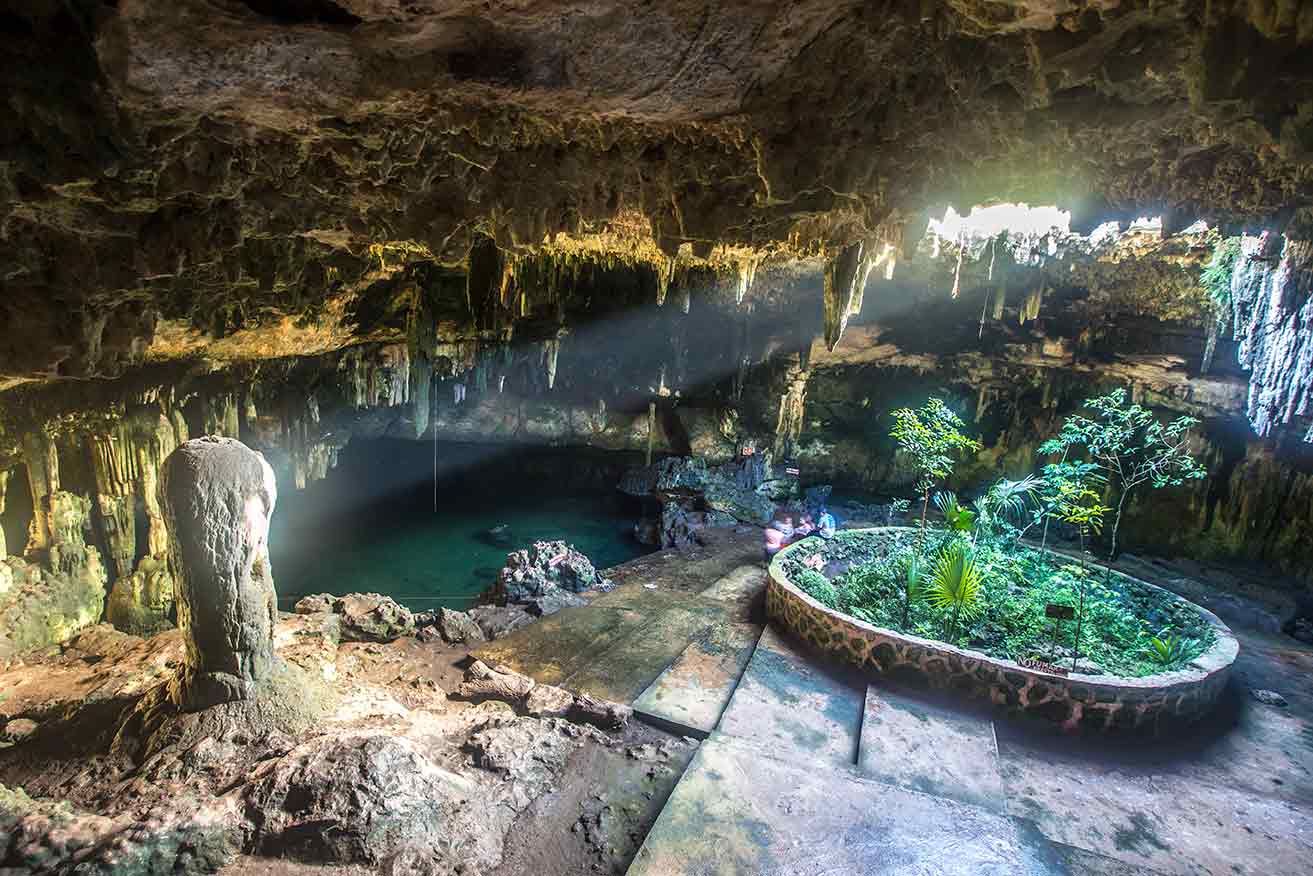
3. Cenote Holcosom
Situated on the same unpaved road as Cenote Balmain, it’s smaller and probably less impactful, but it’s still worth a visit. The descent is comfortable on metal stairs.
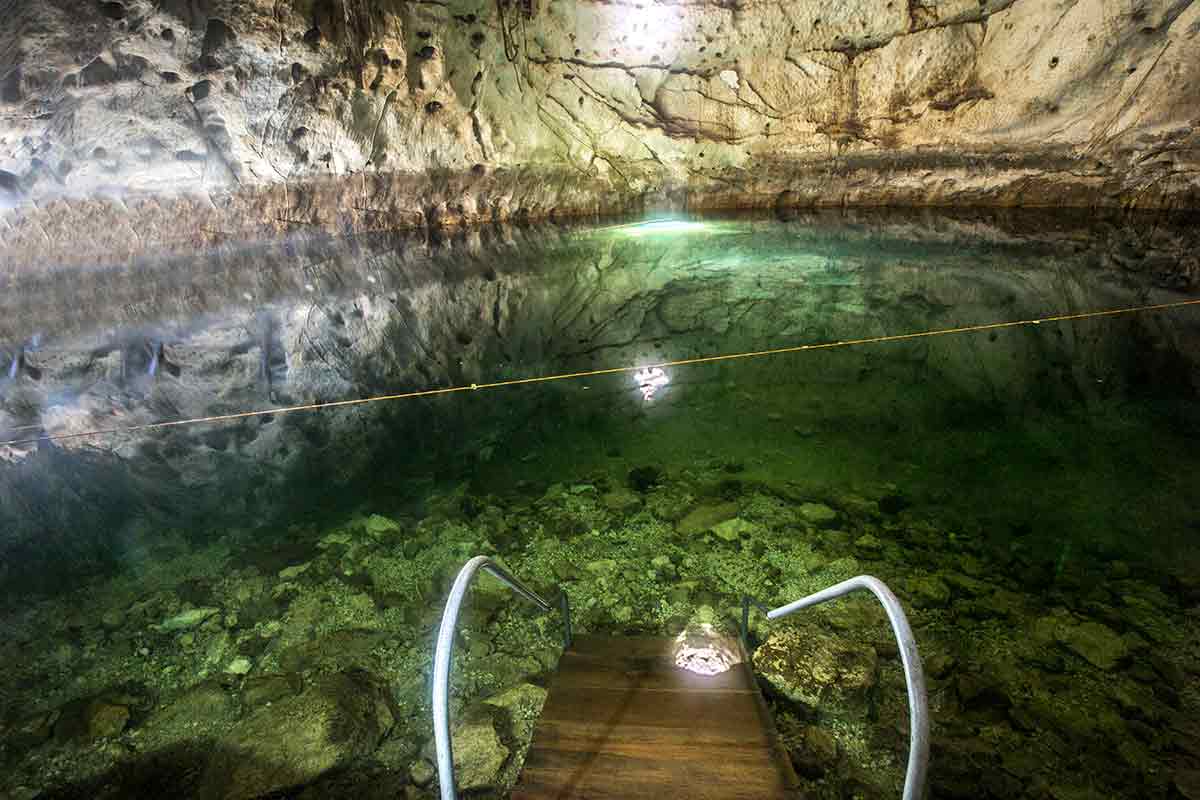
4. Cenote San Antonio
This is not one of my favorites, because they had to build a concrete platform to access it. The entrance and platform are tiny. You cannot jump because the deep water is far from the platform.
Here, they also have cabañas with hammocks, or where you can set up your tent for 80/100 pesos
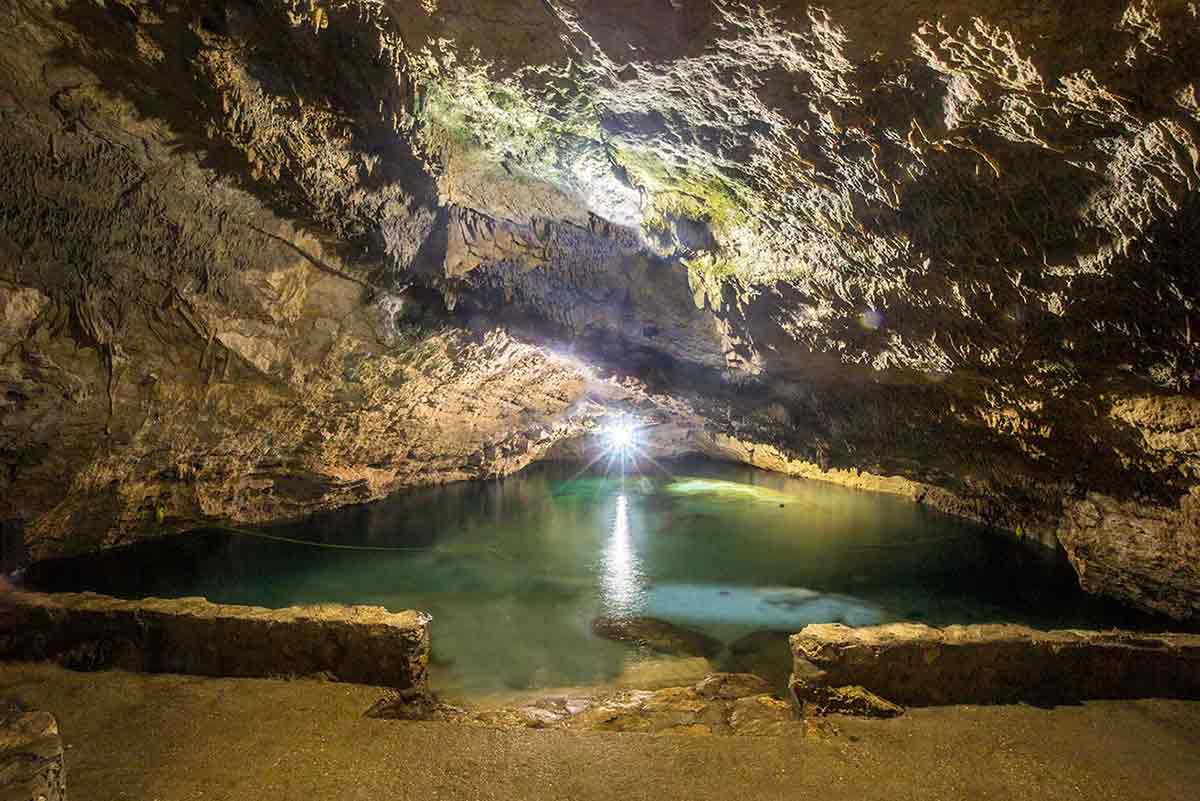
On another side of the main road, you will find another group of cenotes, two of which are quite remarkable.
5. Cenote Santa Rosa
This other beautiful example of the cenote is relatively smaller but certainly worth a visit. They also have cabañas where you can stay and, of course, changing rooms and toilets.
6. Cenote Canunchen
On the same road to Bal Mil, they are quite similar in structure. You have stairs to ascend and descend, very easy to access, and a wooden platform. Canunchen is a little smaller inside. Both have changing rooms and bathrooms in the outside area.
7. Santa Maria Caves
I can’t believe I had them right beside the hotel where I was staying and I didn’t go, despite I knew. Mysterious games our minds play every now and then. I hope to go back someday.
They are popular for their healing mud, which can be worn on the skin. Not sure how healing it is, but it’s sure fun. Once you get there, they explain how it works.
You will walk into the caves in a subterranean river until you bump into a cenote of crystal clear waters. I am sure it must have been a beauty. If you are a little claustrophobic, consider asking how long the walk will last.
8/9. 3 Oches (2 cenotes)
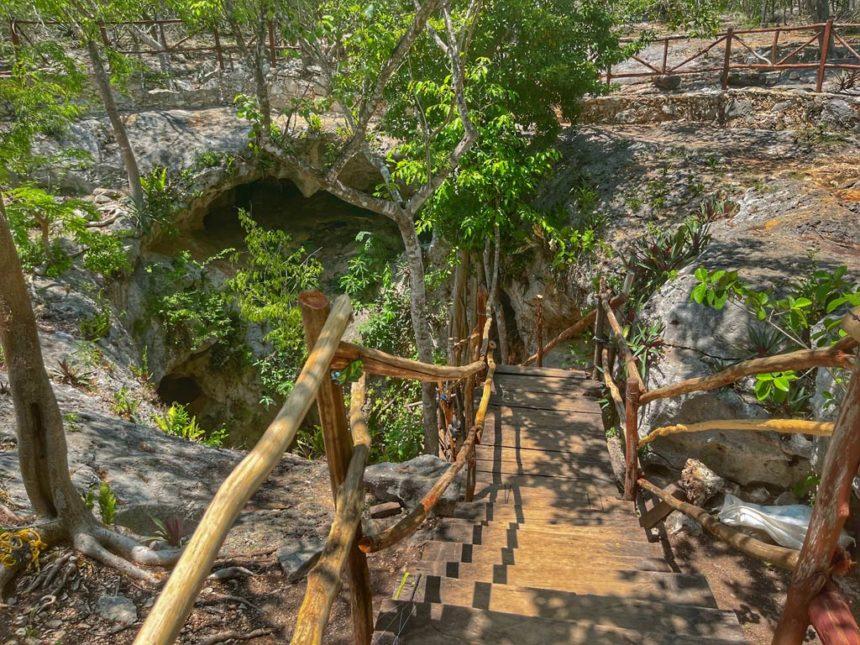
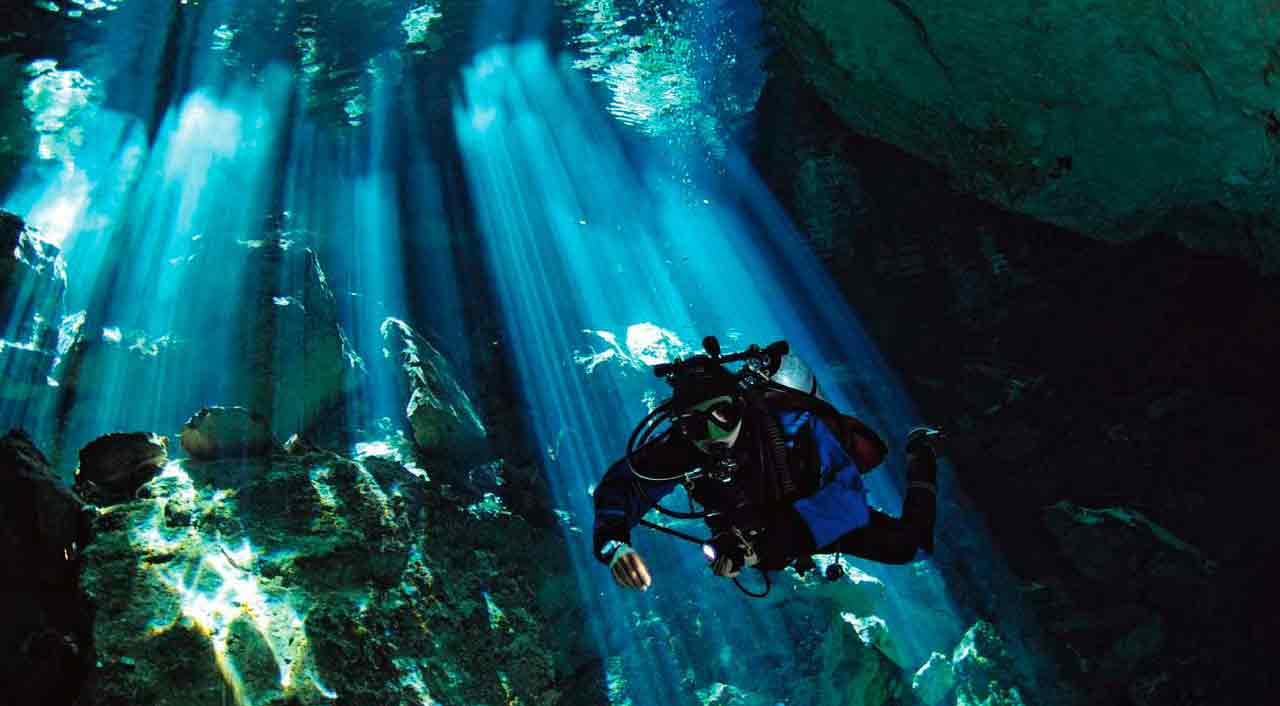
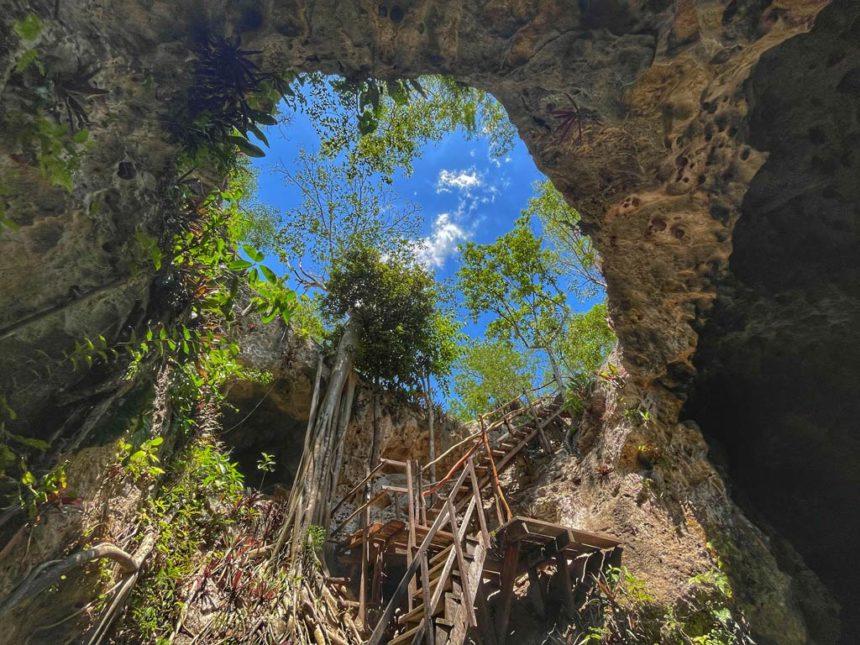
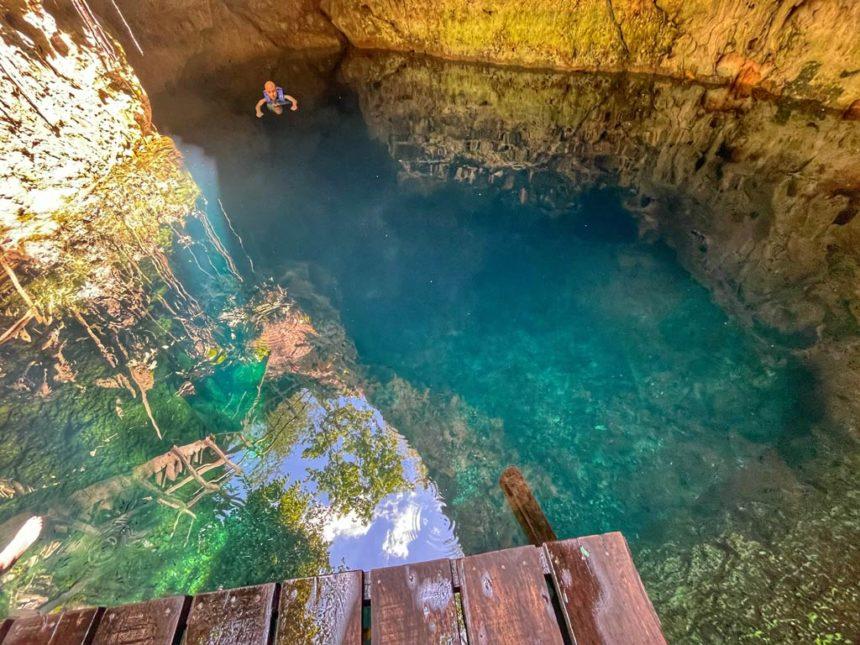
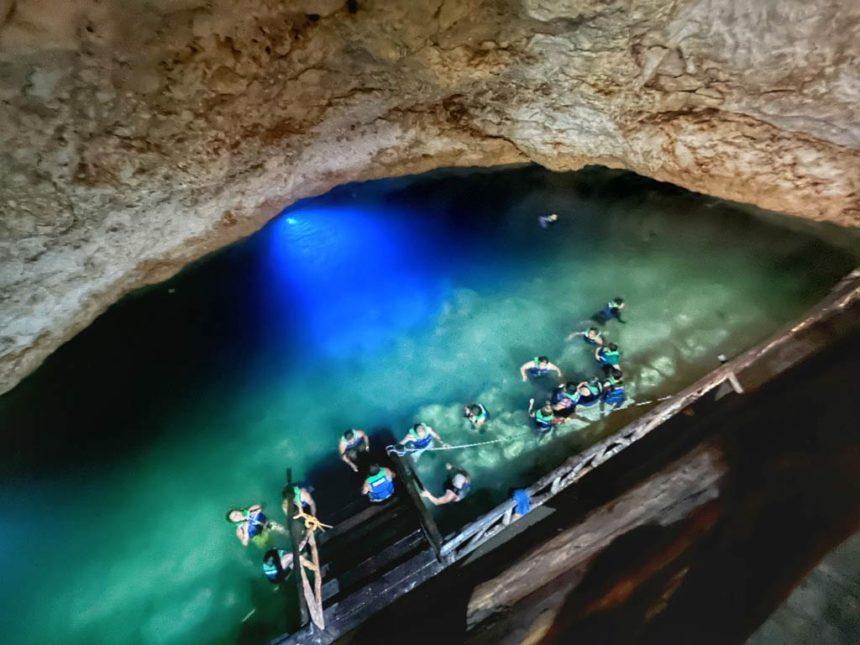
The meaning is 3 foxes. It’s the one in the main picture of this post. As you can see, it’s very narrow and deep with wooden stairs and a wooden platform from where you could jump.
It’s 9 mt deep in the center. I really love it as it’s more natural without any cement platforms, which are helpful to facilitate access, but they take away the charm of such a natural work of art.
I recently revisited these cenotes while updating this post, and they have done a wonderful job of making the descent easier in the first cenote. They are still very natural and have kept their original shape. Here are some pictures.
If you are feeling more adventurous the local guy, which is the son of the owner, can take you down a small cave I didn’t go as I am a little claustrophobic but if you do, please let me know.
10. Cenote Yaxchabaltun
Yaxchabaltun means green “mazorca” on stone – TUN meaning stone in Mayan ( So I was told)
This is located near Homun town, on the same unpaved road that leads to 3 Ochos and another.
Man-made stairs will take you to a concrete platform from which you can comfortably step down the stairs or jump into the cenote. The cenote is 15 mt deep. Suitable for families and kids.
11. Cenotes Santa Barbara
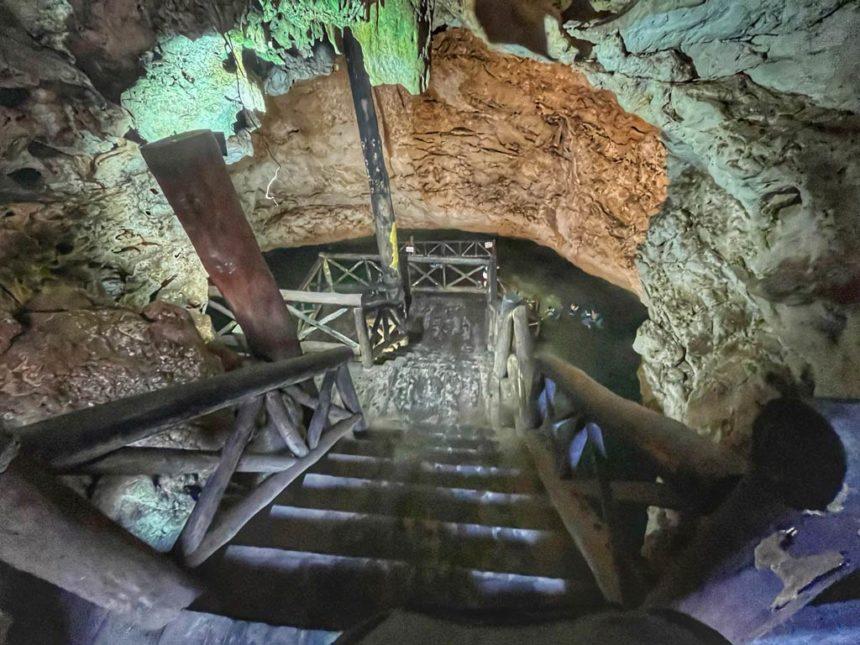
It’s a group with 4 cenotes, nicely organized and well-maintained, located on the premises of what was once an old hacienda in Yucatan.
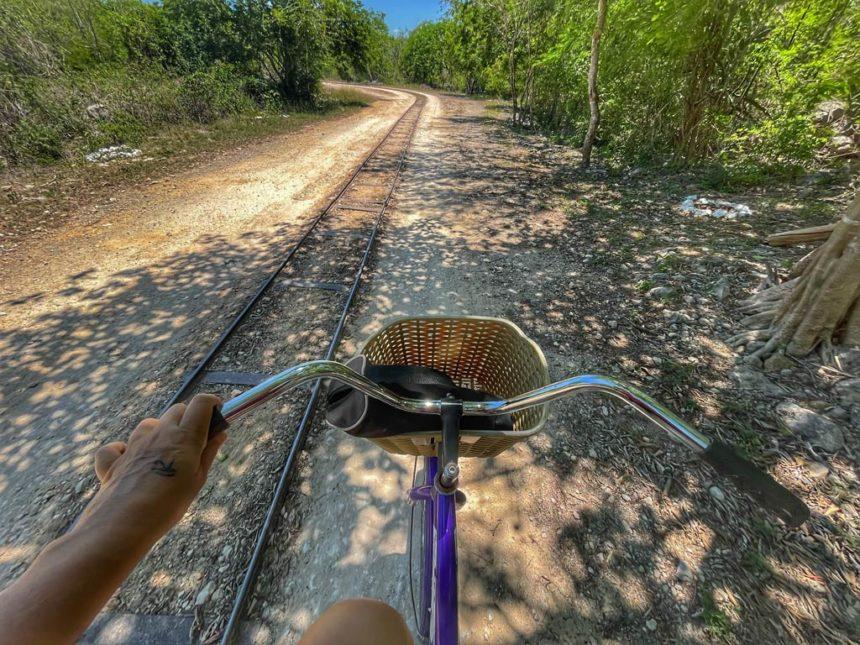
You pay 250 mxn to see the 4 cenotes, including the use of the bike, or a ride on the horse chariot, life jacket, which is mandatory for safety reasons and you can include a local lunch for an extra 100 MXN ( I didn’t try it so I am not sure about the quality of the food, but I am sure it’s quite basic)
I chose to ride a bike and got to the 2nd cenote first, where I was on my own with the other 4 people.
You should then move on to the first cenote and, lastly, to the third, as it’s on the way back as you ride on a circuit.
But since they are only 50 mt apart, you can choose depending on how busy they are.
The first cenote was overcrowded, so I decided to take a couple of shots and leave.
I can’t enjoy a cenote when there are too many people. It takes away the magic.
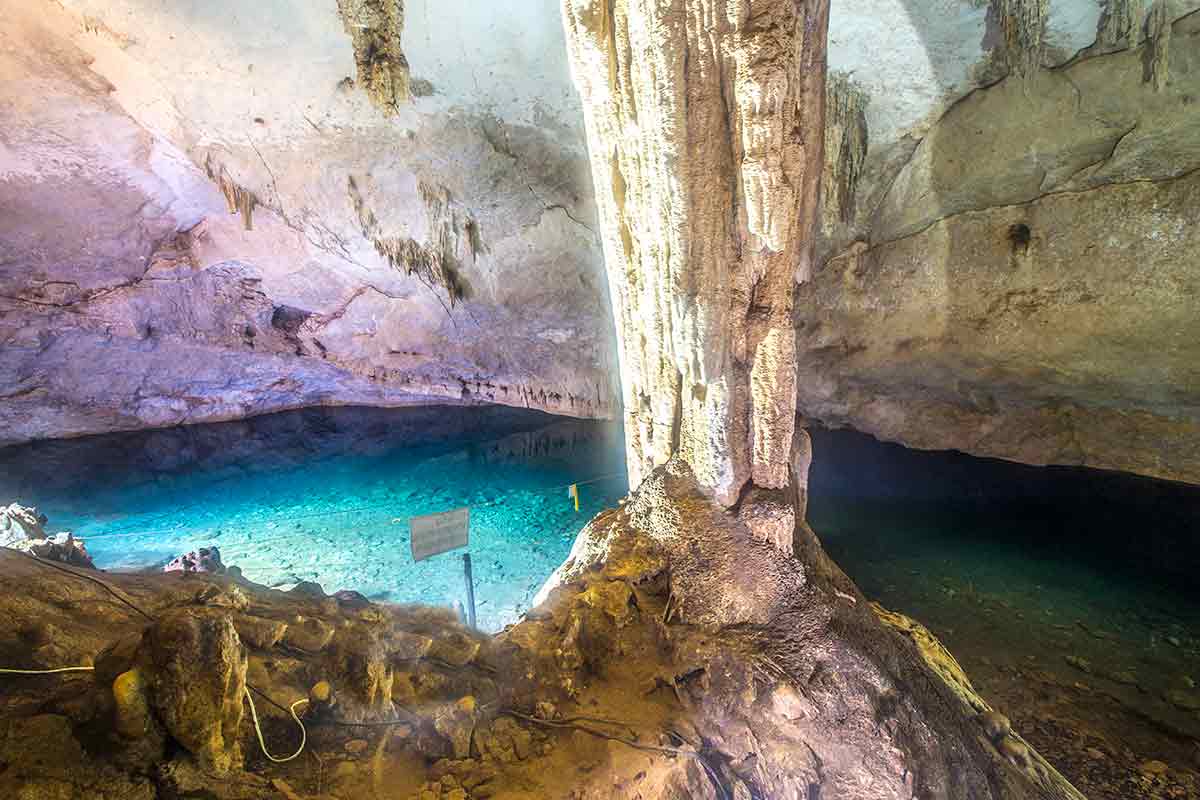
Below are some pics.
Find the cenotes on Google Maps.
How to Get to Homun from Merida
By car, it is about an hour: take the road toward Cancún and exit at Hoctún toward Homún, or go via Acanceh and Cuzamá, all paved and well signposted. Park anywhere in the town center; the mototaxi guides will find you before you find them.
Without a car, colectivos to Homún leave Mérida from Calle 52 between 65 and 67 in the centro, roughly hourly, about 45 pesos each way. The last one back runs around 7 pm, so do not cut your final cenote close. Combis also connect Homún with Cuzamá and Acanceh if you are combining towns. Coming from the east, there are also buses from Valladolid and from Pisté next to Chichén Itzá, which makes Homún an easy add-on after the ruins.
Best Time to Visit the Homun Cenotes
For the famous light beams in the cave cenotes, go between late morning and early afternoon, roughly 11 to 2, when the sun stands high enough to drop through the openings and turn the water electric. Photographers, that is your window.
For solitude, weekdays beat weekends by a mile. Homún is a favorite escape for Mérida families, so Saturdays, Sundays, and any Mexican holiday turn the popular cenotes into swimming pools. Semana Santa and the July-August school holidays are the peak of the peak. A random Tuesday in February, you may share a cave with nobody but the swallows.
Season matters less than time of day here, since cenote water holds around 25°C year-round. The one seasonal note: in the May-June heat, when Yucatán hits 40 degrees, the cenotes are not just pretty, they are survival, and everyone else has the same idea by mid-afternoon. Go early.
How to visit the cenotes of Homun
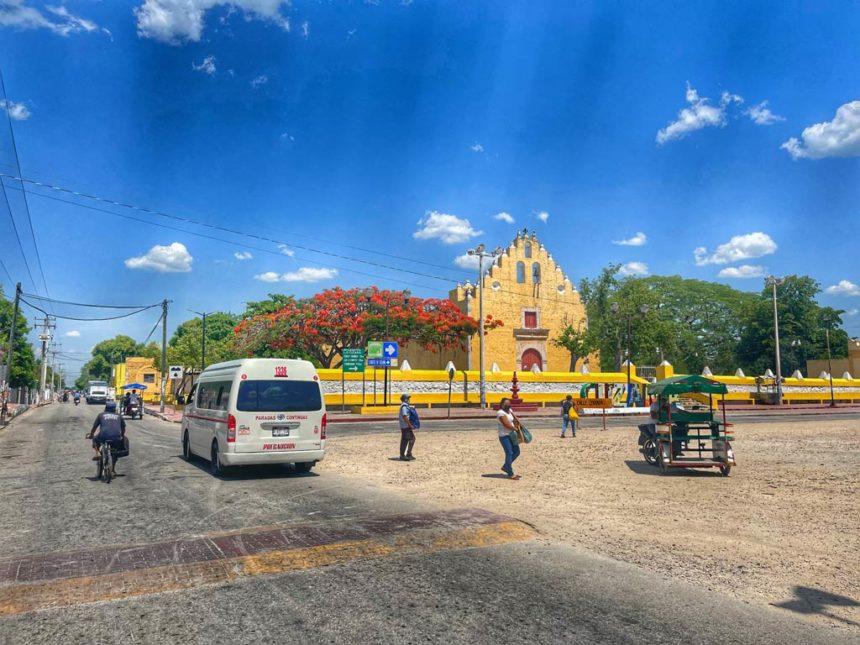
Whether you arrive in your own vehicle or by bus, you will find a local tricycle bike with a small chart that offers tours and will take you all around the area. Or better said, they will find you.
If you have your own vehicle, you have 2 choices: go at your own pace by car, or leave your car parked and ask one of the guides to take you. Either way is good. If you go on your own, you won’t get lost. The cenotes are all well marked, and you cannot miss them.
The majority are located along one small, unpaved, and narrow path in the jungle. You can see them one after the other along the road. The entrance is approximately 100 pesos each ( at the time I visited) – 5$.
If you decide to go with one of the tour guides, it’s still a good choice because they know their way around very well and they will tell you stories about the discovery of these cenotes, besides, you will help the local economy.
Usually, the tour lasts from 9 or 10 until 5, you set the time as it’s a private tour. It costs around 300/400 pesos ( about 15USD) and you have the guide all to yourself. A tip is always appreciated if you are happy with the service.
What to bring
Make sure you have your swimsuit, a towel, repellent (ideally an ecological one), and sunscreen, which should be applied only after swimming in the cenote.
If you plan to visit some cenotes, it’s advisable to bring your mask. Dress light, but I would recommend comfortable closed shoes to protect you from insects.
They are not dangerous but certainly annoying.
Cenotes rules
As in every natural place, I always like to recommend following some common-sense rules in order to preserve the environment, which I am sure you know already, but a gentle reminder is never in excess.
- Don’t wear any sunscreen or repellent before bathing in the cenotes
- Don’t leave anything that doesn’t belong in the place
- Don’t hang on to stalactites, stalagmites, or tree roots
- Don’t do anything that can damage the environment
Where to stay in Homun
In town, there is one modest but very decent hotel called Santa Maria, which is close to the beautiful Santa Maria Caves.
For sure, there are other small hotels in town, which you won’t find on a booking page, as they are small, family-owned properties that cannot afford to stay on the most popular sites.
You can just show up and ask for availability.
If you wish to have a luxury experience, among the luxury haciendas scattered around Yucatan, the closest to the cenotes is one of the best Yucatan Haciendas Sac chic, in Acanchè, just 5 km from Homun.
Homun Cenotes: Frequently Asked Questions
Can you swim in all the Homun cenotes?
Yes, swimming is the point. All the cenotes in this guide are swimmable, and the organized ones (Santa Barbara, San Antonio) provide life jackets, mandatory at some. If you are not a confident swimmer, stick to the ones with platforms and ropes and keep the jacket on; some of these are 8 or 9 meters deep with nothing to stand on.
Do you need to book Homun cenotes in advance?
No. Everything works on arrival: you pay cash at each cenote, and the mototaxi guides wait in the town center. The one exception is Santa Barbara on peak weekends, where arriving before 11 am beats the tour groups from Mérida.
Are the Homun cenotes safe?
Yes, with water sense. The family-run cenotes are simple, a ladder, a rope, a wooden deck, and that is their charm, but it means you are your own lifeguard. Follow the two rules that matter: no diving into water you have not checked, and no swimming alone in the cave cenotes.
How many cenotes can you visit in one day?
Three to four is the sweet spot, which is exactly what the mototaxi circuit delivers. They start to blur together after that, and the best part of a cenote day is floating in one, not collecting six.
Can you wear sunscreen in the cenotes?
No, not even biodegradable at most of them. The cenotes are a connected underground river system and everything on your skin ends up in it. Rinse before entering where showers exist, and rely on a rash guard instead of cream.
Homun Cenotes: Final Thoughts
Although these cenotes are already on the tourist radar and can get very crowded, I still believe they are well worth your time. Whether you go by car or by tour, you are going to love them. Make sure you include them in your Mexico travel planning.
